

Subscribe to continue reading
Subscribe to get access to the rest of this post and other subscriber-only content.

Subscribe to get access to the rest of this post and other subscriber-only content.

With World Cup matches taking place in the United States this year, Kent and I discovered that the one match we both remembered happened long before we’d met: France versus Brazil, in 1998. Here are our stories.
In July 1998, Pam and I were recovering on the island of Tobago in the Caribbean after months of hard work on Coot in Trinidad. We spent some relaxing weeks in Man O’ War Bay, where we were anchored next to a Danish boat named St. Ludmila. We enjoyed playing chess with the Russian Ludmila and her Danish husband in our cockpit. When Ludmila and I played together, she was Boris Spassky, and I was Bobby Fischer, the two most famous Russian and American chess champions of the 1990s. Unfortunately, this time Fischer didn’t do as well as Spassky.
The Danish husband was an avid football fan and had been the manager of a professional Danish team. The Danes had reached the World Cup quarter-finals that year. Therefore, although Denmark had not reached the semi-finals, our Danish friend insisted that we find a place to watch the World Cup Final match between France and Brazil.
So we accompanied our friends to the little village of Charlotteville, where the school had opened the gym and set up a large screen so everyone could watch the match. The crowd included boaters, who were mostly European, and local Tobagans. The Europeans mostly cheered for France, while the locals favored Brazil. The friendly rivalry between the two groups created a lively, entertaining atmosphere.
By listening to my Danish friend’s comments, I was able to appreciate details of the play as the game progressed. Unfortunately for our hosts, the Brazilians lost 3-0, but the loss did not dampen the goodwill with which we were welcomed to the village.
Because soccer (as it is known in the United States) had not yet reached the popularity among Americans that it has now, I had never watched soccer matches on television or paid much attention to the World Cup. The experience in Tobago changed my appreciation for the game, and I came to see why it is called “the beautiful game.” When I served in the Peace Corps in my little mountain village in Colombia, I made a few attempts at playing the sport, but my game, unfortunately, was not beautiful at all.

My husband Ed and I were not sports fans, so on Sunday, July 12, 1998, when we drove back to our little rental house tucked away in the hills near Mons La Trivalle in southern France, we were only dimly aware that the World Cup Final match would be played just outside of Paris that evening, and that France and Brazil were the final contenders.
We’d spent the day exploring the Camargue, hoping to see the white horses and enjoying the renowned bird life. After enjoying a leisurely lunch near the waterfront in Aigues-Mortes we began the long drive back in the late afternoon. The roads had been busy all day with Sunday traffic, but oddly, as we circled the outskirts of Montpellier, there were almost no cars on the road. What was going on?
As we left the main highway for smaller roads, traffic remained sparse. Had an earthquake been predicted? Had war been declared? Where was everyone? We drove through a village where the entire population seemed to be gathered at the bar in the town center. As we drove slowly past, a crowd flanked the road, shouting and waving flags. We waved back, wondering why we’d gotten such a raucous greeting. What was going on? As we encountered similar crowds in village after village, it dawned on us that they weren’t awaiting some celebrities to pass; they were gathering at their local pub to watch the World Cup Final, and madly hoping France would win. When we reached Mons La Trivalle, the closest village to home, we could see through the windows that a crowd filled the bar, and all eyes were glued to the television screen.
“Let’s stop!” We went inside, ordered a couple of beers, and joined the crowd. I wanted to stay until the game was over, loving being part of the crowd, but Ed was tired and less engaged than I, so we left, and I stayed up listening to the French radio. My understanding of the play-by-play account was limited, although the excitement was unmistakable. France defeated Brazil 3-0, and the French were ecstatic. Had I gone back to the village there would probably have been revelry with horns blowing, liquor flowing, and possibly even fireworks, although Mons La Trivalle was very small.

Now, twenty-eight years later, I’m still sorry I didn’t go back to the village to share the excitement, especially when I see the enthusiasm of the fans on our television screen as Kent and I watch some of the matches, now being played in the United States, from the comfort of our easy chairs. We will be watching as Spain and Argentina face off on Sunday, July 19, 2026. Correction: earlier version said France and Argentina — no, it is Spain and Argentina.


See you in August! And also check out Caminobleu.com if you want to learn about the picture on the wall behind us.
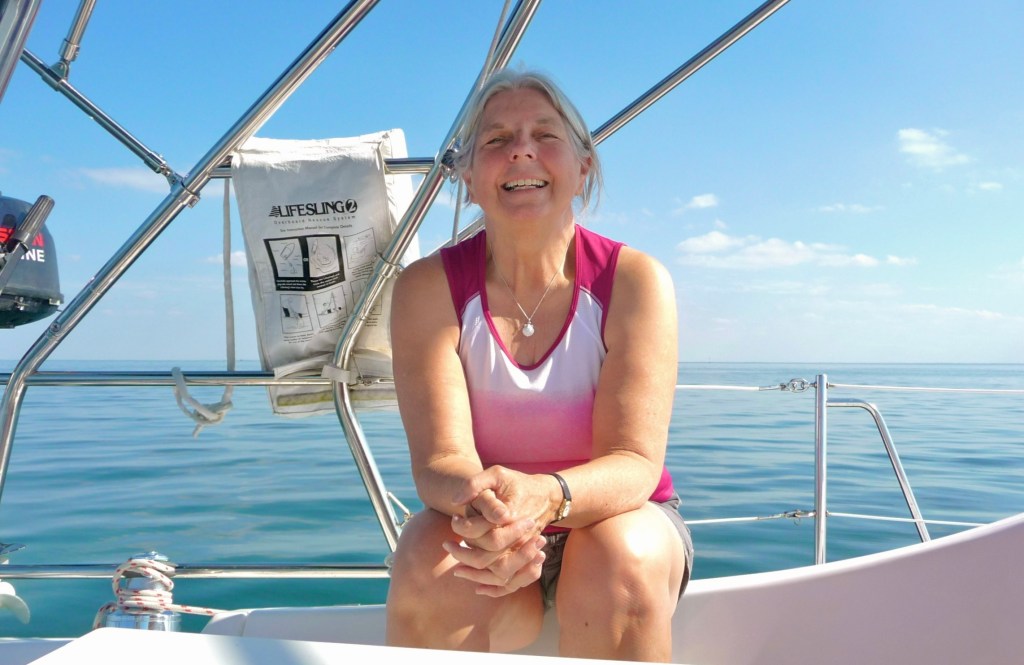
Before the wind hit!
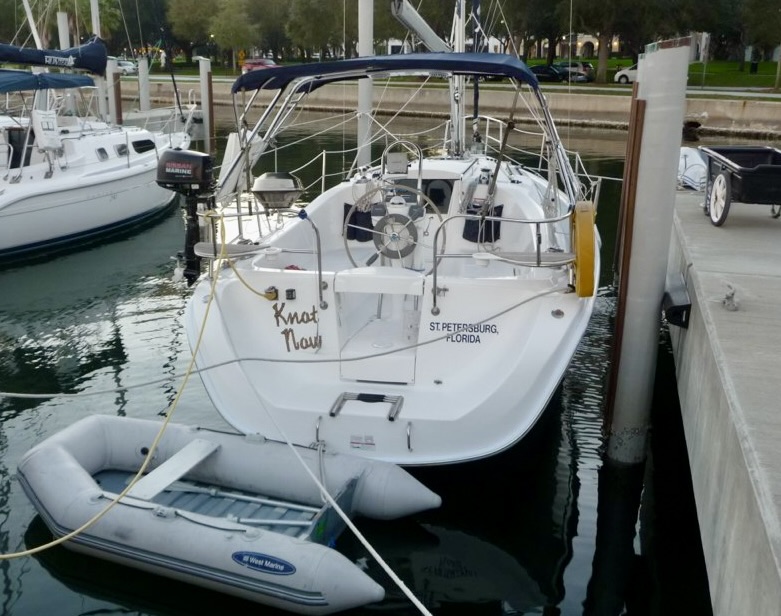
Before Kent and I were married, we set some tests for each other. We survived an international trip, hiked together, and went tent camping. The sailing test remained. Although I had been on many boats, I had never been sailing. So, Kent chartered a boat in St. Petersburg, Florida. I loved the shiny new boat that waited for us at a dock in a rather posh marina. I smiled! I was finally going sailing!
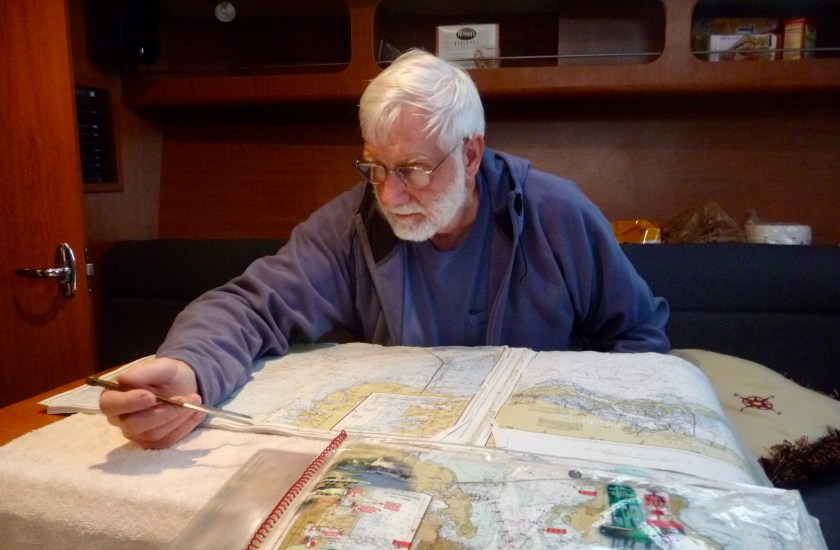
I sensed that Kent was preoccupied and nervous as he familiarized himself with the boat’s systems and contemplated our passage south along the Florida coast. Perhaps unrealistically, I trusted that with his many years of experience, we’d have smooth sailing. I wasn’t worried.
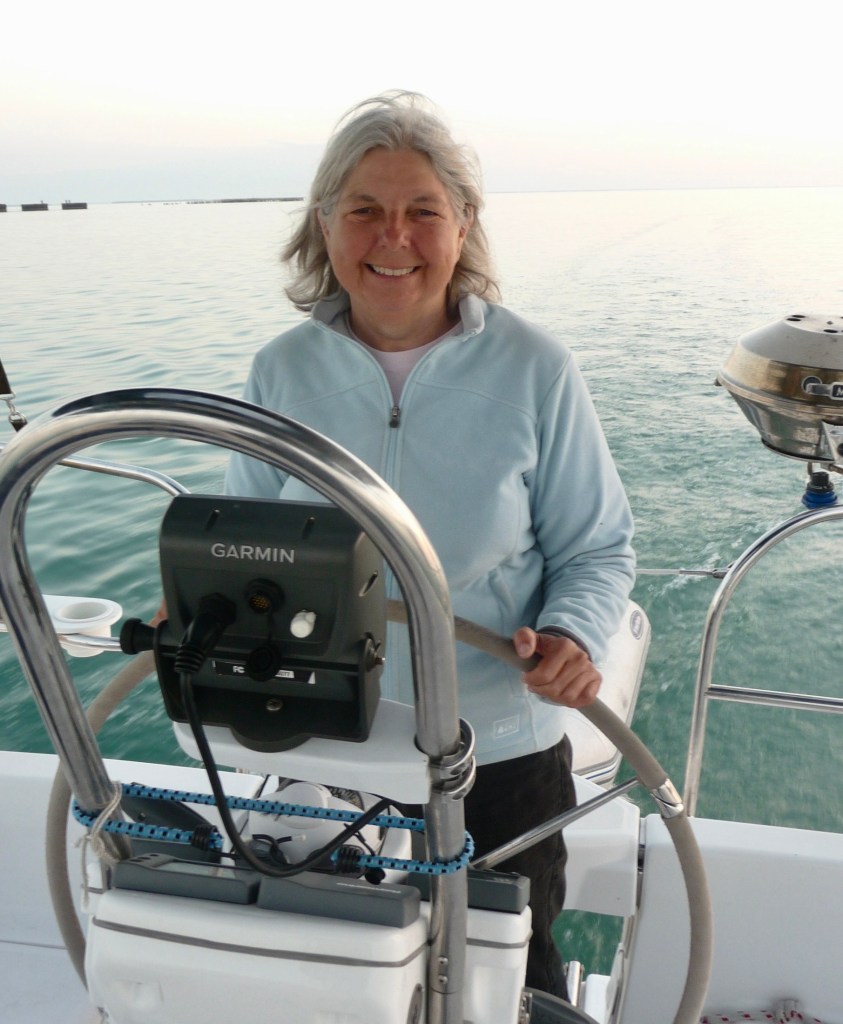
After grocery shopping, we took a shakedown cruise into Tampa Bay. Kent raised the sail, but there was little wind. So after he killed the engine, we lazed in the cockpit, enjoying the February sun and the gentle rocking of the boat. This was the glamorous sailing life I’d dreamed of! We were almost dozing when a gust of wind whacked the sails, the boat heeled, and suddenly we were on the move!
“Take the helm!” Kent shouted. “Point straight ahead!” He went forward to lower the sail, but he couldn’t figure out how the furler worked. Unprintable language blew past. The boat bounced and heeled, and I held tight to the wheel, doing my best to stay upright and steer straight ahead.
My mind raced. What would I do if Kent fell into the water? I pictured him flailing in the waves while the boat sailed on without him. Should I try to save him? How? There are no brakes on a boat. How would I get back to him or the marina? Was this the end of our new life together?
Fortunately, before I dissolved in panic, he figured out the mechanism for the furler, pulled in the sail, and came back to take the helm. I let go, and we hugged each other.
It was time to head back to the marina to meet my cousin for dinner. My hand still shook as I pressed her number on my phone. “We’re out on the bay and should be back on time,” I said.
As we neared the marina, Kent looked worried. “I’ve never had a boat that backed up before. I don’t know if I can back it into the slip. We circled past
several times. The space was not much larger than the boat. I have trouble backing up a car. I certainly didn’t want to try it.
I called my cousin again, explaining why we’d be late. She couldn’t stop laughing. “I see you out there! I’ve been in that situation!”
“I don’t know how to do this,” Kent finally confessed, and called the marina, explaining his predicament. A man needs courage to ask for help, and I admired him for doing so.
“Just pull up near the end of the dock!” the voice on the marina phone responded to Kent’s embarrassed call. In a few minutes, a lithe young fellow ran the length of the dock and leaped aboard our slowly moving boat. In minutes, he backed the boat into the narrow slip with nary a bump or scrape.
“I think I could do it now.” Kent thanked our rescuer, who indicated this was no big deal and a common occurrence.
It was the beginning of our Florida sailing adventure. Would our relationship pass the sailing test? More to come next time…
I’ve recently read two books, both by young women who sailed as children with their fathers who have written their own, quite different versions of their daughters’ stories. I’m still searching for a copy of Gordon Cook’s elusive book, Schooner to the Southern Oceans: The Captain James Cook Bicentenary Voyage, 1776-1976, and have Tom Neale’s All in the Same Boat : Living Aboard and Cruising.
Boat Kid : How I Susrvived Swimming with Sharks, Being Homeschooled, and Growing up on a sailboat. by Melanie Neale,
It’s rare to find a memoir written by someone so young. Melanie Neale, born in 1979, published this book in 2013. Her story begins with her first introduction to Chez Nous when her parents visit the boat under construction before she is born, and ends when she is 25
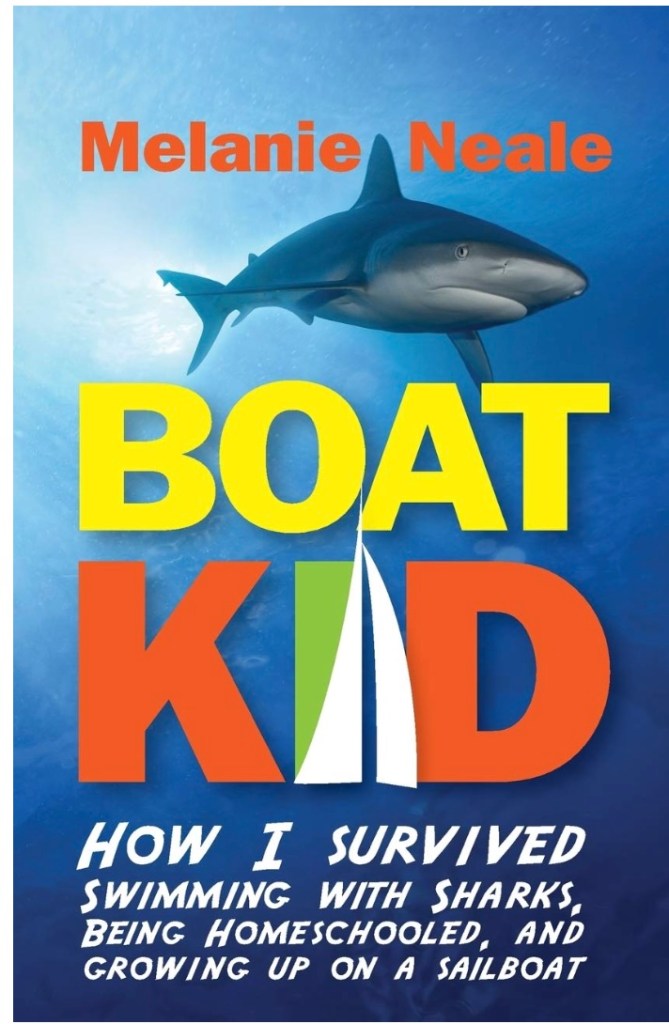
Only after finishing this book did I realize that it was intended as a children’s or young adult book, and that she had previously published Boat Girl (2012), an adult book that covers roughly the same material. The book is arranged chronologically, with each chapter heading including the location, dates, and her age. This made it easy to keep track, since sometimes a year goes by between chapters, especially as she gets older/. Her college years are summarized in one chapter. After finishing this book, I feel compelled to read both the adult book and her father’s account of family life on boats. Reading this and Suzanne Heywood’s memoir of another child who grew up on a boat, and whose father was also a writer, has led me to reflect on both the positive and negative aspects of that experience. Since Kent and Pam also hoped to raise their children on a boat, but gave up after a year, I wonder what it would have been like had they succeeded. I also wonder whether either of his children will end up writing their own version of their months of living on a boat.
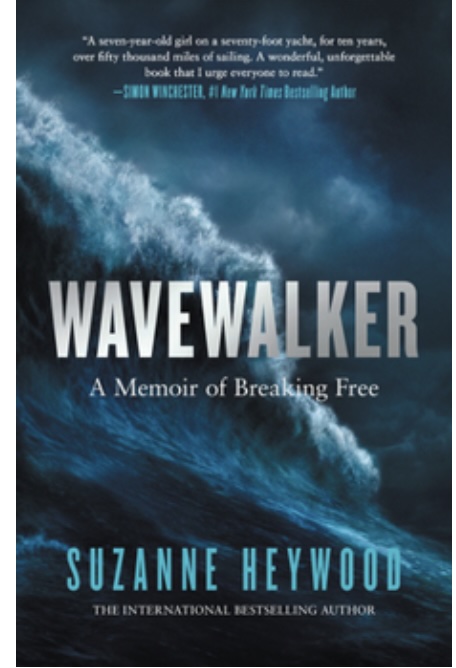
Review of Wavewalker: A Memoir of Breaking Free by Suzanne Heywood.. London: William Collins, 2023
Heywood has written a gripping tale of her incredible and troubling childhood from ages 7 to 17, when she lived on a sailboat with her parents and younger brother. Her father set out with his wife and two children
from their home in England, obsessively intent on retracing Captain Cook’s third voyage on its 200th anniversary in 1976, perhaps as a publicity stunt.
As the intended three-year voyage turns into ten years, he seems to lose track of that goal (after all, the anniversary has passed), and becomes concerned mainly with luring crew to pay to work on the boat for the privilege of making a passage and learning to sail. He takes on several jobs that never seem to last long. The family obviously needs money since their sponsors have backed out, and they have no jobs. Several thoughts occurred to me as I read this book. Probably the biggest one relates to the “breaking free” of the book’s subtitle. What was it like to be imprisoned in someone else’s dream? Even so, Suzanne loves the sea and the boat.
I wonder about the motivations of parents who choose to homeschool their children and/or take them out to sea. Do they seek to take them away from the “ordinary world,” or do they seek to broaden their experience? Do they wish to control them or protect them? Or are they, paradoxically, seeking both of these things? I wondered about this in both Boat Kid, and in Heywood’s book.
Like Neale’s book, the Wavewalker is organized chronologically, with chapter headings that include the dates and the number of days for each section of the voyage. Many passages in the book are beautifully written. The author, like Neale, excels at showing, not telling. The narrator’s voice in the first part of the book sounds much too mature for a seven-year-old, and Heyward has obviously invented most of the conversations throughout the book, although some might come verbatim from her journals, and perhaps even from her parents’ stories.
I would like to know the parents’ version of the story. From the narrative, it is almost certain that they treated their daughter cruelly and unreasonably and favored their son, but this is the daughter’s story, and we see mainly her perspective. The fact that her parents had nothing to do with her when she was writing the book was chilling. Her mother has since died. I hope to read her father’s account, Schooner to the Southern Oceans (2011), but I have been unable to find a copy anywhere, whereas, ironically, Wavewalker is a bestseller. I wonder how many other “boat kids” have written their own versions of their parents’ stories when they grew up.
So long until next time! Linnea and Kent
May brings an urge to travel – the days are longer, the birds are returning, and school is ending. Everything’s coming to life after the routines of winter. Perhaps you are dreaming of filling up the gas tank and hitting the road or hopping on a plane.

Oops! Fuel prices have skyrocketed, and reality sinks in. If you had a sailboat, the wind would blow you where you wanted to go for free! Sound familiar? No sailboat? You could travel on foot or by bicycle.
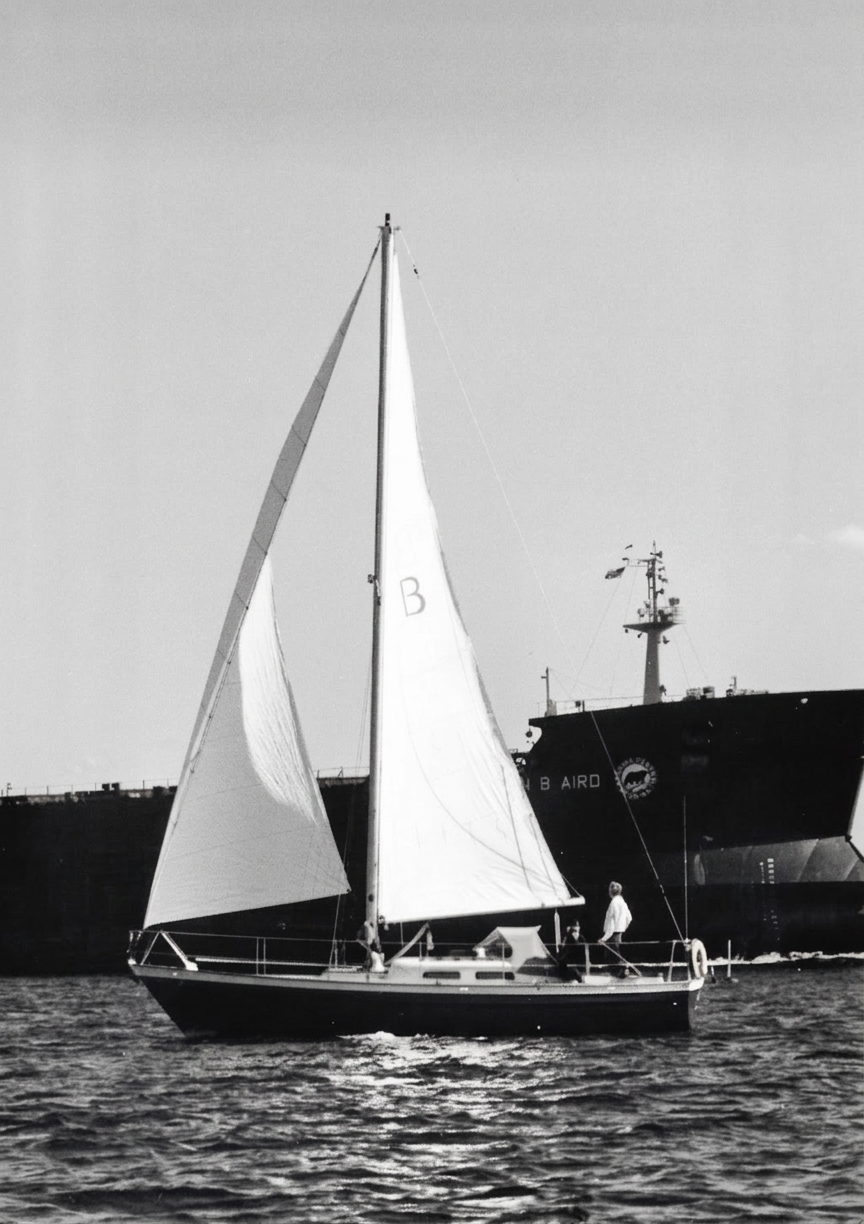
In 1984, Kent, Pam, and Andy crossed the Atlantic in their thirty-eight-foot sailboat using less than ten gallons of diesel fuel to charge their batteries. In the 1990s they paid five cents per gallon for diesel fuel in Venezuela. In long-ago times, sailors had no electricity at all, and Pam and Kent met at least one sailing couple (on Emerald) who relied on wind alone.
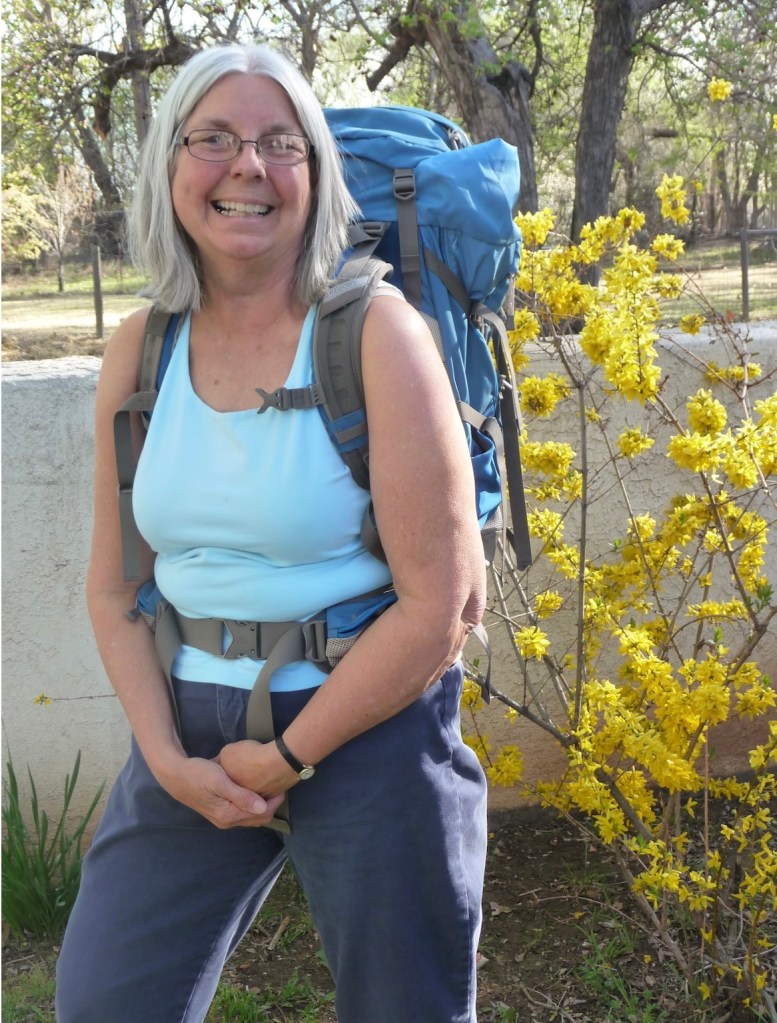
In 2010, during my first pilgrimage through Spain, I smiled as I passed petrol stations. No need to stop! My boots were my tires, and my legs and lungs the engine, fueled by tortilla de patatas, café con leche, and zumo de Naranja (Spanish tortillas, coffee, and orange juice).
(Might be Nice to Stay Home and Read!)
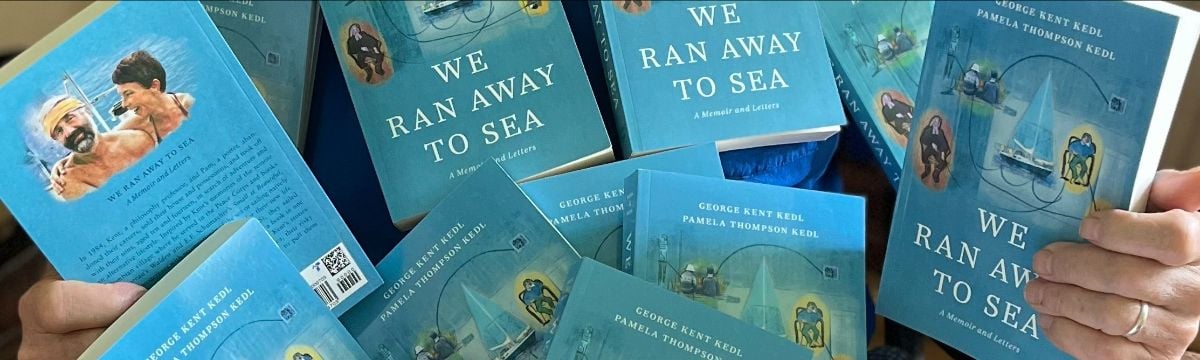
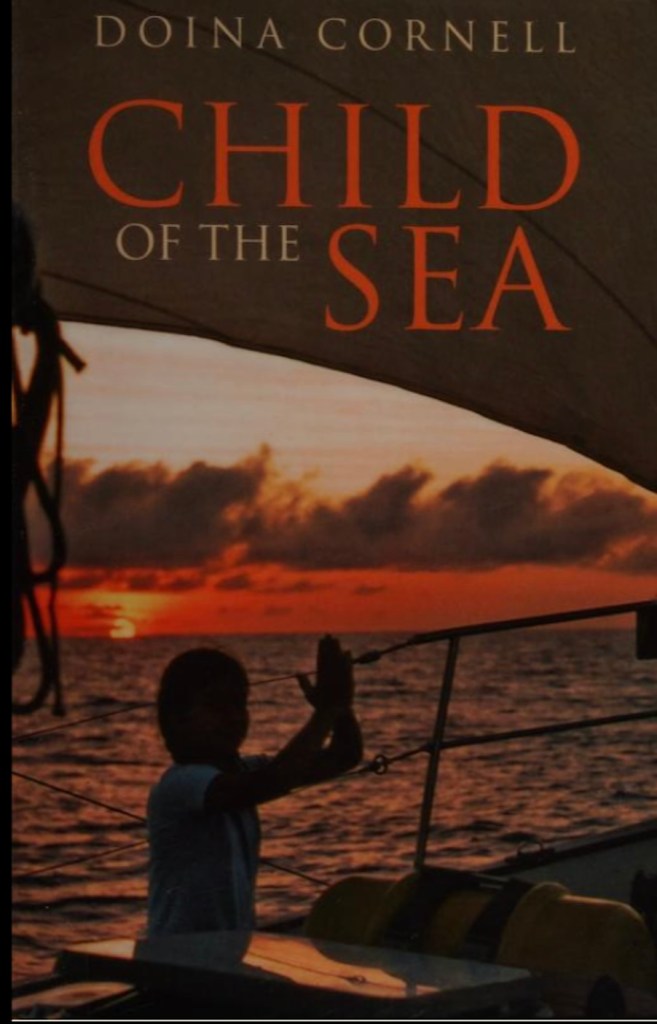
If you’re not ready to set sail or take off on foot on the Continental Divide, Appalachian, or Pacific Crest trail, or one of many lesser-known trails or bicycle paths (for the price of shoes, a backpack, and perhaps a bus ticket), but would rather be an armchair traveler, you might enjoy reading We Ran Away to Sea: A Memoir and Letters (if you haven’t already read it), or one of several sailing books I’ve recently enjoyed including A Marriage at Sea: A True Story of Love, Obsession, and Shipwreck (2025) by Sophie Elmhirst, and Child of the Sea: A Memoir of a Sailing Childhood (2012) by Doina Cornell.
Our friend Jim Sollars has also recently added to his series of sailing adventure/detective tales, and Tom Cunliffe, whose gift for storytelling is evident in his portrayal in We Ran Away to Sea, has recently published a historical adventure story of his own, Hurricane Force (2025). I’ve just started reading it, and the opening chapters drop you right into a heart-stopping situation.
For something different, take a look at Seagoing Gaucho, the wild story of a group of Argentinians who sail to Africa, Europe, and navigate the Mediterranean Sea in the years immediately following World War II. On the way home they follow the path of Columbus from Spain to San Salvador, then beyond to North America before returning home. I found the book on Internet Archives. To read it, you need to set up an account, but that is easy to do.
Camino books I’ve recently enjoyed include Jacqueline Saxon’s Tales from the Trail: Keeping It Real on the Camino de Santiago: One African American Woman’s Quest for Clarity (2025), and Andrew McCarthy’s Walking with Sam: A Father, a Son, and Five Hundred Miles Across Spain (2023)
As for our writing, I am still working on Home Sea Home, or Andy and the Sextant, a picture book currently with an editor, and on my memoir Once a Pilgrim that may not see the light of day for a long time yet, while Kent is still poking along, prodded by me, editing some of the stories he left out of the original book and writing new stories about his life since then…hint: he meets me!.
Keep reading, and please consider writing a review (no matter how short) of We Ran Away to Sea. Write back! We need encouragement, and we look forward to hearing from you. Add a comment or email us at jacana@jacanapress.com by copying this email or clicking below.
 |
| OH-OH! I NEVER SENT THIS, AND NOW IT IS MAY! April Showers! We woke this morning to clouds and a hint of rain, so welcome in parched New Mexico, where temperatures have reached record-breaking heights for most of March, and our irrigation ditches, which should have been flowing by now, are still dry. |

| The day before April Alone, alone, I walked in the woods And I sat on a stone. I sat on a broad stone And sang to the birds. The tune was God’s making But I made the words. — Mary Carolyn Davies (1888–1974) |
I always remembered that opening line as “the first day of April…” but I was wrong! Curious about who Mary Carolyn Davies was, I searched for information about her and discovered an interesting but sad story. The most complete account is an article by Dan Colburn in the online Oregon Encyclopedia.
At the the University of California at Berkeley in 1912, during her first year, Davies made a name for herself as a poet. However, she dropped out and moved to Greenwich Village in New York City, where she arrived with $4.85 to her name. She published her first book of poetry, came to the attention of Louis Untermeyer (poet, critic and anthologist) who said her work varied from hack work to serious poetry. She published several books of poetry and at least one play, achieving considerble success in the 1920s, returning to Oregon home for some years before returning to New York. She apparently stopped writing, and someone found her in the 1940s, quite destitute in New York City. According to the Oregon Encyclopedia she lived until 1974, but nothig seems to be known about her later years. A mystery investigate, perhaps?
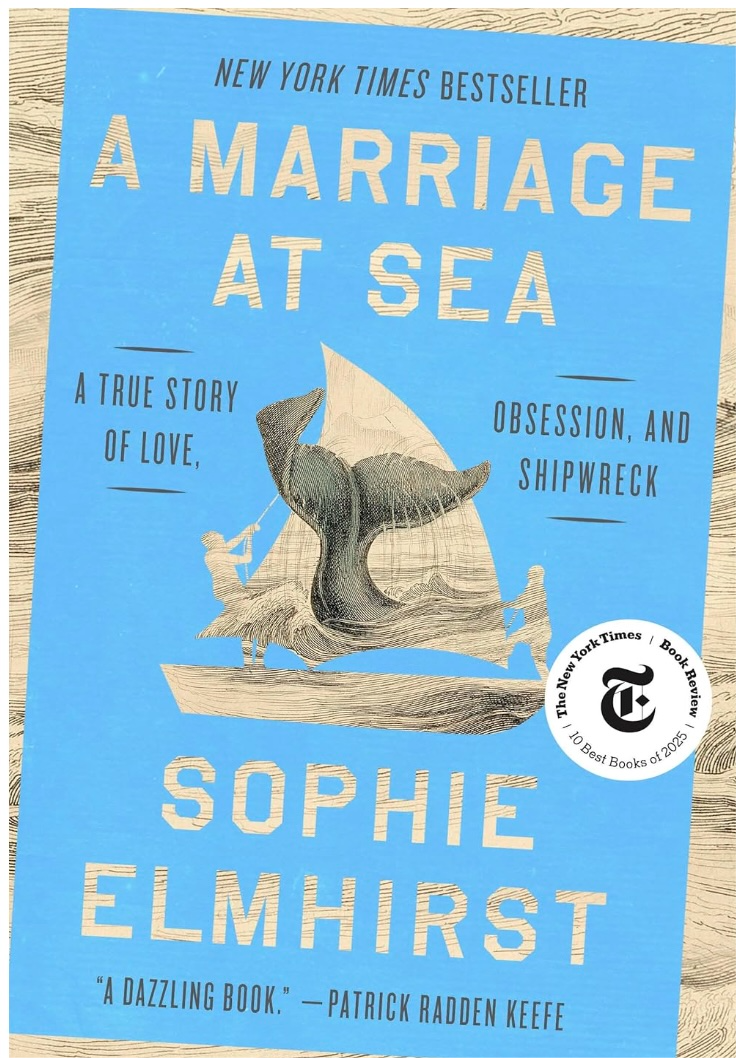
| If you enjoyed We Ran Away Sea, you might also enjoy A Marriage at Sea — a book a neighbor alerted us to about a week ago. It turns out Kent long ago read the account written by Maurice Bailey, the subject (along with his wife Maralyn) of this book. Although Kent and Pam did not experience a dramatic shipwreck, their book is also, in some ways, an exploration of their marriage. Here is my review: Marriage at Sea: A True Story of Love, Obsession and Shipwreck by Sophie Elmhirst. This beautifully constructed narrative draws on diaries, news accounts, and interviews to tell the story of Maurice and Maralyn Bailey to fill in the context of their incredible survival story after their sailboat was sunk by a whale in the Pacific Ocean. It really is the story of a marriage at sea, and how two unusual people, who complement each other managed to survive against incredible odds. Even though Maurice had written his own account of their survival, Elmhirst manages to hold the reader’s interest by adding background and additional information to flesh out their story and give it a meaning beyond what even the survivors may have understood. The entire story is profoundly moving, and ironically, these two, who wanted to be alone together at sea, end up becoming celebrities and darlings of the media, upon whom they have to rely for the resources to continue to pursue the life they want. |
 |
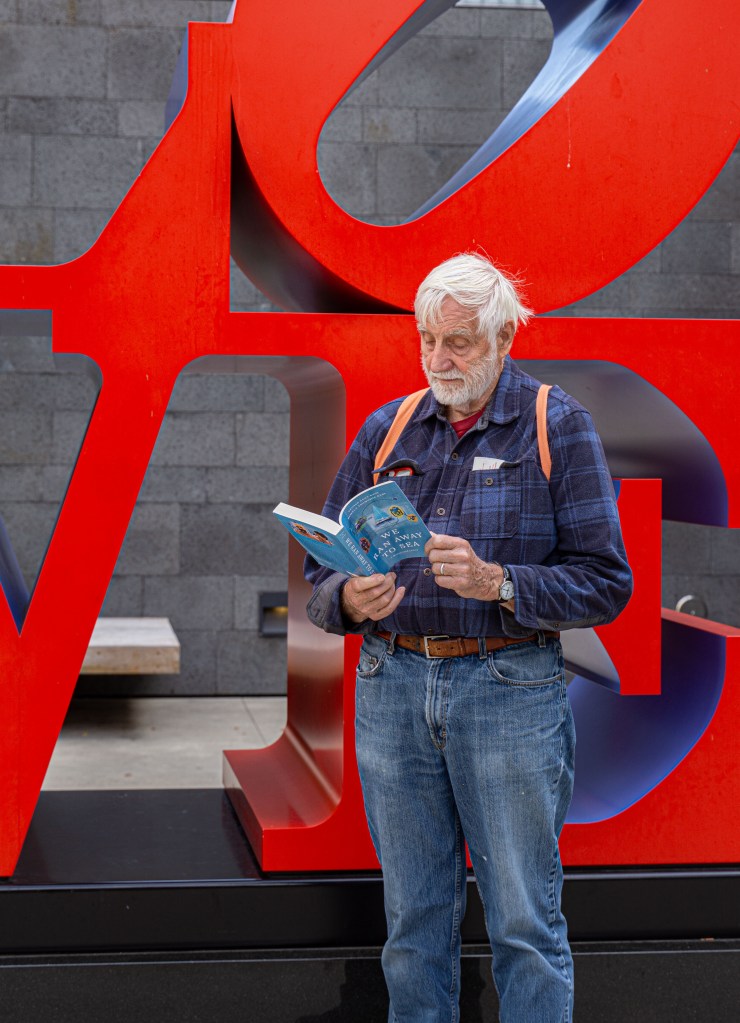
What have we been doing in the month since we returned from Africa and the glorious Cape Verde Islands, besides trying to set up Mailer-lite?
10. We had all the pressure water lines replaced in our house, which entailed living with plumbers and erratic water supplies for almost a week.
9. I’ve been making crazy videos on TikTok using Canva, iMovie, and TikTok’s own program in hopes of selling more books. The ones I spend the most time on and think are the best get the fewest views. Take a look and vote (click on the heart) for the ones you like best. Look for Linnea448. Keep your eyes averted when you encounter some of the other stuff (not in my account!). It’s a wild world out there.
8. Book sales have been falling over the past month. Maybe time to try something new – like writing a newsletter?
7. Kent has been writing more stuff to add to a sequel to We Ran Away to Sea,
6. I finally set up my new Epson 8550 printer that arrived in December. It prints beautifully, although I’ve just begun to explore what it can do, including printing photos on larger paper. Oops. I haven’t ordered the larger paper yet.
5. Partly to make my workspace work better with the new printer, Kent and I spent a morning moving furniture around. I just took a couple of pictures, but it still looks depressingly messy. Maybe next time?
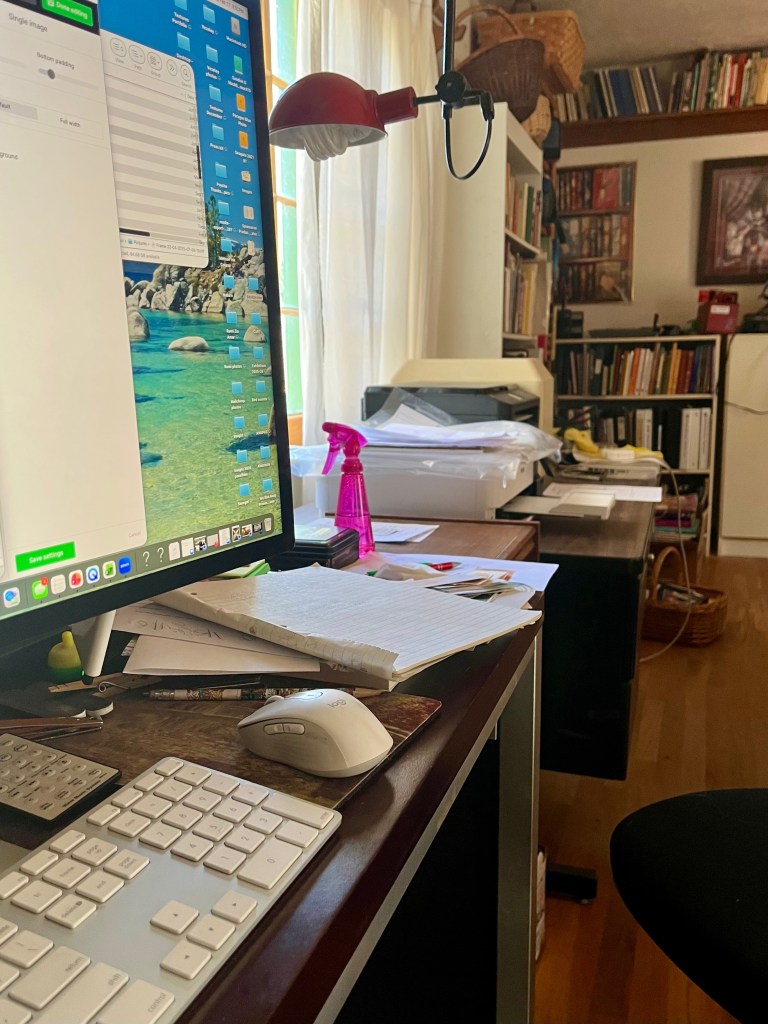
4. I made a New Year’s resolution to clean up the piles of folders and who knows what else that have been stacked in my office on the beautiful big coffee table that Kent built long ago. You can now see the top, although it is still not perfectly clear. A friend and I agreed to share our progress on organizing. Hey, Dana, how is it going for you? A picture next time? Maybe that will motivate me to finish the job AND keep it neater from now on. Maybe I can invite all of you to come for tea?
3. I upgraded my wonderful Sony A6000 camera to the A6700. Figuring that out has taken a few hours, and I’m not done yet.
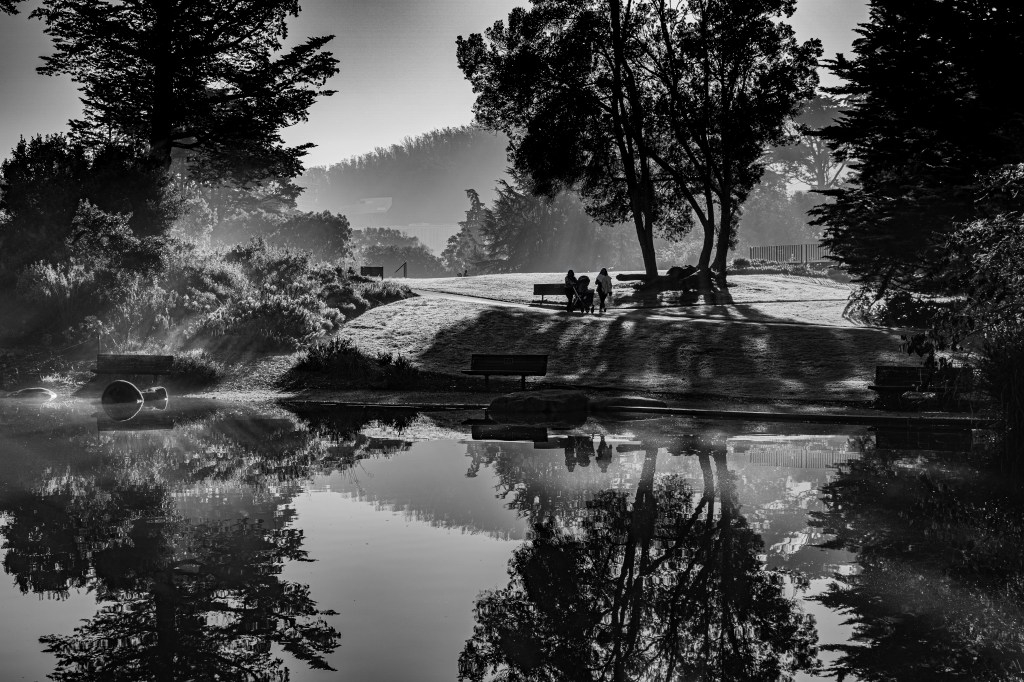
2. I’ve been submitting photos to exhibitions, near and far. One picture was accepted, and I sold two prints in December, so that has been motivating.
1. I’m revising two picture book stories and have continued writing. I’m congratulating myself that I managed to sort through all those folders without getting too distracted.
AM I ALLOWED A MINUS ONE? After two years in a repair shop, I stopped by one day (amazed to find it open after years of unanswered phone calls!) and reclaimed my old Bose radio, still without the CD player, but now I get to listen to classical music on KHFM while I work. It keeps me going in a happier frame of mind.
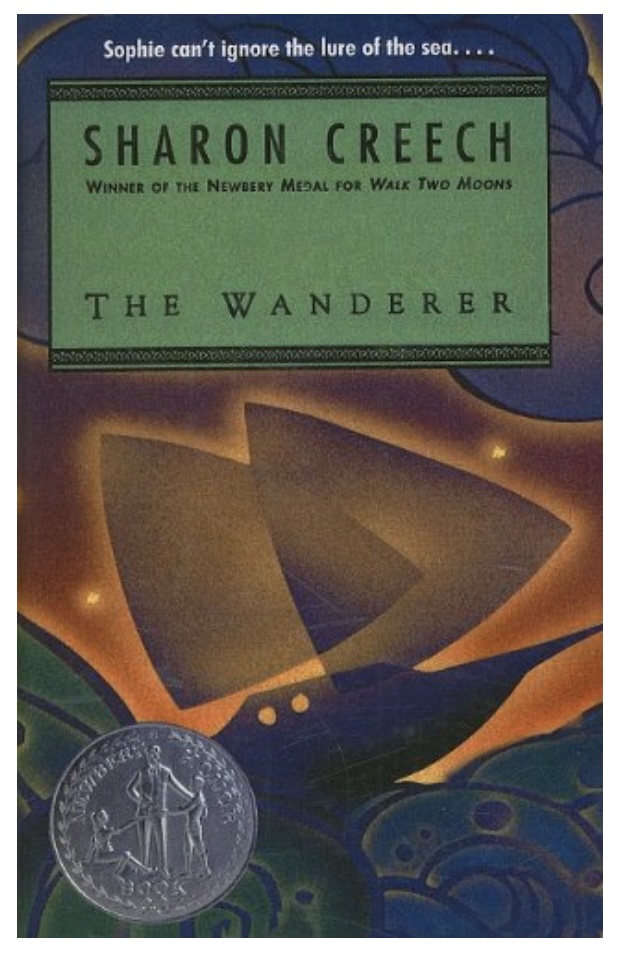
Of course, there’s been much more besides… but this is already too long. I can see I have to write more often. I’m listening to Sharon Creech’s The Wanderer. How did I miss this before? It is a great story of life on a sailboat from a teenager’s perspective (actually two teenagers’ perspectives, so it is two voices, just like We Ran Away to Sea. What a great writer Creech is! Sadly, the book is available from the library only as an audiobook. I’ve ordered a print copy so I can enjoy it that way, too.
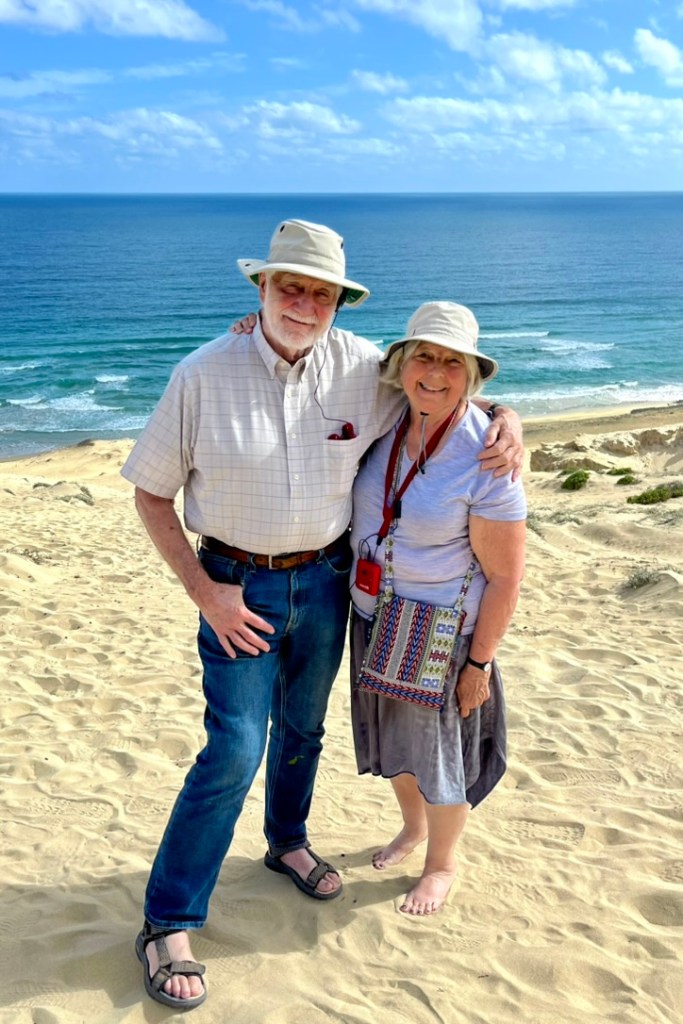
HAPPY VALENTINE’S DAY! We are looking forward to a visit from Andy (yes, the Andy who was a little kid and a young man in We Ran Away to Sea.
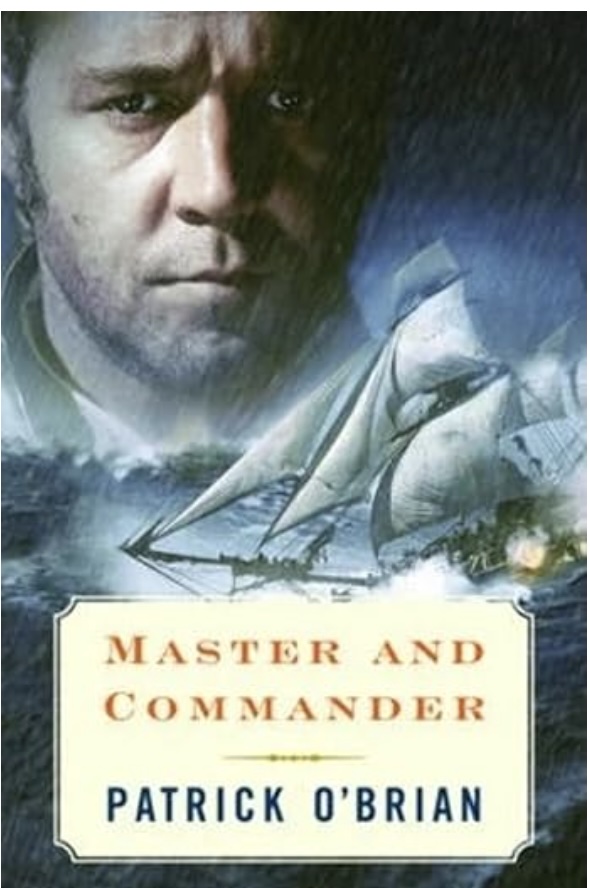
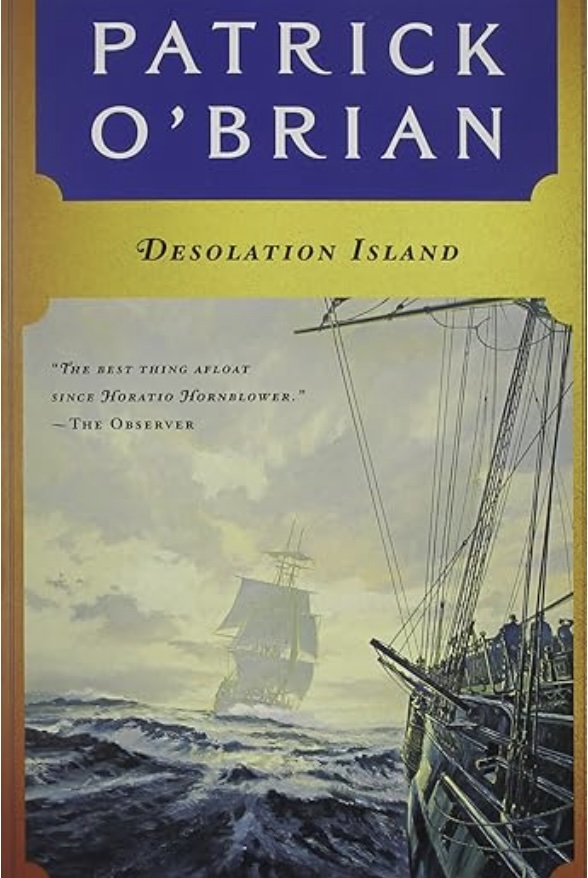
A few days ago, I stuck my nose in our Little Library and discovered a collection of 10 Patrick O’Brian Aubrey/Maturin novels. I hadn’t read any of these books since leaving Coot twenty-five years ago. The three or four books I read in the 1980s and 90s were acquired haphazardly in trades with other boaters and read without order or coherence. I set the stack of books beside my chair, took a look at the top one, started reading, and finished it the next morning. I arranged the books in order, starting with Master and Commander, and I am now on the fifth one.
I delight in the sailing descriptions. O’Brian manages to bring the life and times of the British Navy in the 18th century to life better than any other author I know. I just finished reading his account of a stormy crossing of Biscay Bay in Desolation Island, and it rang true to my own 1984 experience of that body of water. Despite the difference between a 74-gun ship of the line and a 38-foot ketch, extensive repairs were required in both cases.
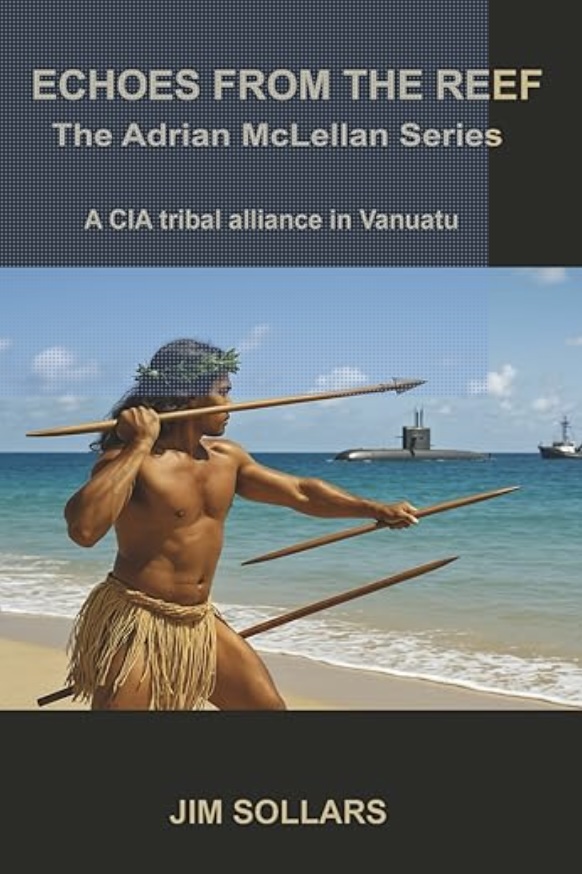
Like Kent, Jim is from Sheridan, Wyoming, and became a sailor and a writer. Unlike Kent, Jim is prolific, with books published on Amazon in both October and November this year. Here is his latest thriller:
We are following the adventures of Ned and Kate Phillips on Instagram, the same Ned and Kate Pam and Kent met more than thirty years ago in the Chesapeake (October 1994). (See Chapter 11, Going South, pp. 109-11.) They are now sailing from England to the Cape Verde Islands and beyond. Coincidently, if all goes to plan, Kent and Linnea will arrive via the ninety-eight-passenger Corinthian at Santiago Island in the Cape Verde Islands on Christmas morning (one month from today), but we will almost certainly miss Ned and Kate.

“Hang on to your hat. Hang on to your hope. And wind the clock, for tomorrow is another day.”
—E.B. White, author
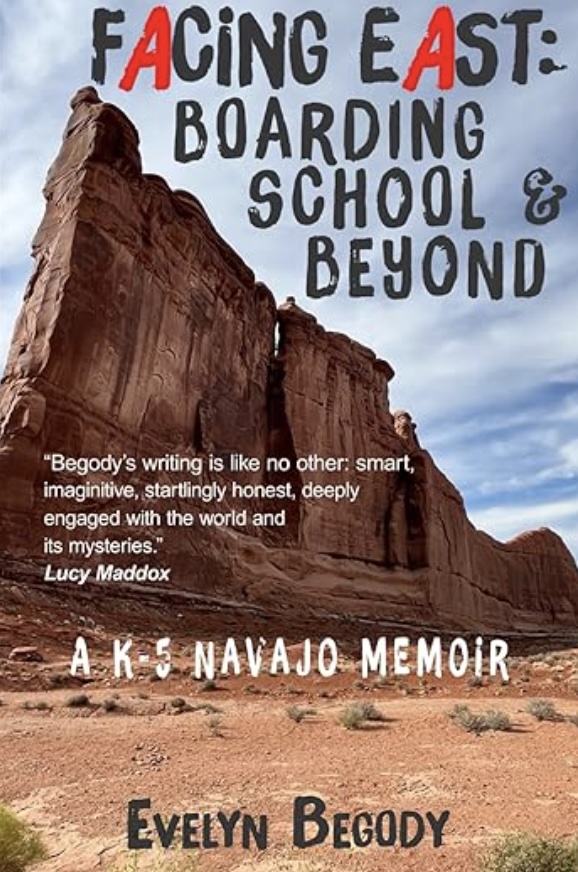
See also, Linnea’s Blog https://www.caminobleu.com (coming soon) for more on the writing inspired by Evelyn Begody’s new memoir: Facing East: Boarding School & Beyond. Her account of her early education may also inspire you to reflect on yours.

Remember the days before cell phones? On road trips, we stopped at gas stations for directions, studied maps, checked our AAA books for motels and lunch spots, and looked for quirky kid-friendly attractions, like the National Museum of Roller Skating in Lincoln, Nebraska.
Thirty years later, Kent and I were returning to New Mexico from a trip to Colorado, Wyoming, and Montana, where we visited friends and relatives. Three more overnights remained; one in Laramie and two with Kent’s childhood friends in Colorado. We’d left Sheridan, Wyoming (Kent’s hometown), and were nearing Casper when we stopped at a rest area.
“Let’s give the Reeds a call,” I suggested. “We need directions to their place. Where’s your phone?” It wasn’t in his shirt or pants pocket. A search of the car yielded nothing.
“You didn’t leave it at Dick’s, did you? How could you possibly leave your phone behind?”
I checked my phone and found a text message from Dick. He had the phone. I called him. No, we didn’t want to drive back to get it. He promised to mail it to us. Luckily, I found two numbers for the Reeds on my phone and a scrap of paper with their address.
I texted them, “Kent left his phone in Sheridan. So call and text to my phone. Send directions to your place.” They called while we were negotiating a detour around Casper. I juggled the conversation while trying to give Kent guidance.
“Oops! You missed a turn!” The phone call ended, and we got back on track.
Three days after missing our turn and spending two pleasant days with the Reeds, we stopped to celebrate our return to New Mexico by enjoying a simple lunch at the family-owned Mesa Vista Café in Ojo Caliente. We still had a couple of hours to drive, but crossing the line into New Mexico was always a homecoming. I checked my phone for messages and opened one of the many enticing notices from Overseas Adventure Travel. We fantasized about possible future exotic adventures. But now, we were looking forward to being home.
“I can drive now,” I said when we finished our lunch. “I know the way, and you don’t have to use my phone for directions.” I hopped into the driver’s seat and we continued along the familiar route past Hernandez, made famous by Ansel Adams, through Española to Santa Fe, and onto I-25, with its straight shot into Albuquerque. We congratulated ourselves on beating the rush hour traffic.
We were relieved to have finished the long day’s drive and happy to be home at last. I reached for my phone to let Mike and Susan, our friends and tenants, know that we had returned. But where was it? The phone was not in any pockets, under the car seats, or in my purse.
“Could I have left my phone? No! Not me!” I looked at Kent, the possibility of the impossible inevitably dawning on me.
“How could you possibly forget your phone?” he said, with a schadenfreude smile. I opened my laptop. “Find my phone” revealed its location at the Mesa Vista Cafe in Ojo Caliente. We’d have to drive back there tomorrow. I groaned, then searched for the restaurant online and sent an email and text. There was no reply, of course. I texted Susan, who came at once. She called the restaurant, although we knew it would be closed for the day. But, to my relief, someone answered.
“Are you calling about the phone?” they asked.
“Tell them we’ll come and get it tomorrow,” I told Susan
Alas, our travels weren’t over yet. I wasn’t looking forward to another trip to northern New Mexico this soon. We were still visiting with Susan, when her phone rang again. A person connected with the restaurant the Mesa Vista cafe would be heading to Santa Fe for some grocery shopping. Could we meet her in 2 hours at a gas station on Airport Road near the Relief Route? Oh, yes! Her name was Stacy, and we wrote down her number. Susan insisted we take her phone with us, or we’d have no way to get in touch.
Weary as we were, we got back in the car.
Traffic was backed up leaving Albuquerque. We didn’t want Stacy to have to wait for us. Could we get there on time? I took a shortcut—longer in distance, but we bypassed the bottleneck and arrived at what we hoped was the correct gas station ahead of schedule. Susan had given us her phone in case we’d needed to connect with Stacy.
The convenience store attached to the station was doing a brisk business that Friday evening, with construction workers picking up huge packs of beer and topping off the gas tanks of their big trucks. This was not the tourist’s Santa Fe. The men were unexpectedly friendly and polite as they dashed around us on their way in and out of the store. We tried not to block the door. We felt out of place and must have looked lost.
“Are you having car trouble? Do you need help?” one fellow asked. We probably didn’t fit the profile of someone waiting for a drug drop, so what were we doing there? Susan’s phone dinged with a text from Stacy. “Be there in ten minutes!” We had no idea what she looked like, but she’d be driving a black RAV Four.
We never saw the RAV Four, but here came a young woman – our angel! — holding my phone. She was the niece of our lunchtime server. She refused the forty dollars I offered her. I gave her a hug and profuse thanks.
“Just tell your friends to stop at the cafe,” she said.
I felt as happy as a child who’s found her lost teddy bear. I called Susan to tell her the good news – but the phone in my hand rang. I had her phone! By the time we headed south, traversing I-25 between Albuquerque and Santa Fe for the third time that day, traffic had lessened. We arrived home again, grateful for the help of the Ojo Caliente family, Susan, and the construction workers. They boosted my faith in humanity.
If you’re ever passing through Ojo Caliente, do stop at the charming Mesa Vista Café. If you leave your phone or any other belongings there by mistake, they will be in good hands.
Kent received his phone a few days later. He put a check in the mail to Dick, who was adamant that he didn’t want it. We reflected on how these phones, which are so much more than just telephones, and that didn’t even exist thirty years ago, have become essential in our daily lives.

Kent reads from a chapter of the book on the Wyoming Prairies. Click here for the YouTube Video
News about the book (and other books)

Money for Mangos’ sailing blog has a nice short list of great sailing adventure books. When I contacted them about listing We Ran Away to Sea, I got a reply saying they had the book, and were putting it on their “to read” list and hoping to read it soon! Check this list out here:
Money for Mangos: Best Sailing Adventure Books
We’ve been reading some other sailing books. I just discovered Child of the Sea, written by Doina Cornell, the daughter of renowned sailor and author Jimmy Cornell. She circumnavigated the globe with her parents and younger brother in the 1970s, when she was between the ages of 7 and 14. I’m finding it delightful, gaining insights that will help me write my children’s books. It is available on Amazon, but I also found it on one of my favorite websites, the Internet Archive.

Another sailing memoir that caught my attention is And Then We Hit a Rock by Greg Buenzli. This family of five, a dog, and a cat sailed along the east coast of the U.S. and the Bahamas in a deluxe catamaran for a year. The breezy story is told with wit and humor. Predictably, the family encounters all the troubles common to inexperienced sailors, as well as the mechanical problems of boats. In that way, the book is similar to We Ran Away to Sea, but these folks are not operating on a tight budget. They spend a fortune without having to sell their home and give up their jobs to fulfill the author’s dream.
My favorite line from the book description: Remember: If everything had gone exactly as planned….it wouldn’t have been much of an adventure.
I enjoyed the book, and you might too, but what shocked me was the fact that this book has over 4,000 reviews on Amazon and almost 3,000 on Goodreads. Kent’s book has just reached 80. Granted, quite a few of these reviews say nothing more than “Great book!” and that kind of thing, but still…
I wrote to the author, asking how he managed to do this, but did not receive a reply, so the success of this book remains a mystery to me. It ranks #1 in Amazon’s category of sailing narratives (Kent’s book was a respectable #6 last week), #2 in Travelogues & Travel Essays, and #6 in Traveler & Explorer Biographies.
So, come on, fans! We need to do better. We are still in the hole paying for Amazon ads.
Former philosophy professor George Kent Kedl gave up his 20-year teaching career for life on a sailboat with his wife and children. His award-winning release We Ran Away to Sea: A Memoir and Letters (2023) was written with a combination of his late wife Pamela Thompson Kedl’s letters and his own memories of their adventures. Look for Kent on his website JacanaPress.com, on Facebook and on Tiktok. We Ran Away to Sea is available at Amazon, Barnes & Noble, and Bookshop.

At its heart, what is your memoir about?
It is the story of my mid-life crisis, roughly spanning from 1984 to 2000, when I was obsessed with creating a life of cruising the world on a sailboat.
Read the full story :
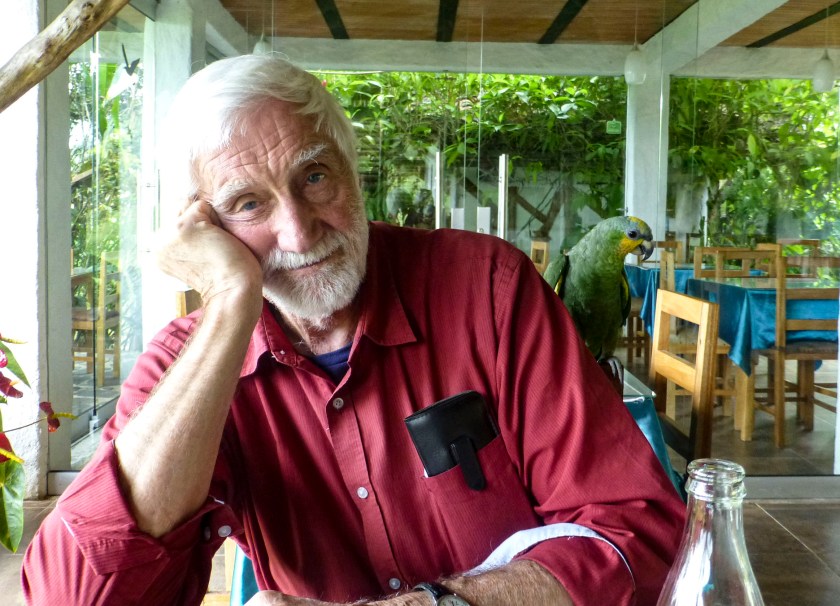
Kent with a parrot in San Augustin, Colombia in 2019.
When Kent and I volunteered as hospitaleros at the pilgrim albergue in El Burgo Ranero on the Meseta in Spain in October 2016, we had a morning playlist that got the pilgrims up and out so we could clean before the next pilgrims arrived. The final song was “Hit the Road, Jack,” and “don’t come back, no more more, no more no more, no more!”
After the last pilgrim boogied out the door, we listened to this and other songs on the playlist while we cleaned the bathrooms, wiped tomato sauce off the kitchen tiles, and swept and mopped the floors. You can listen, too:
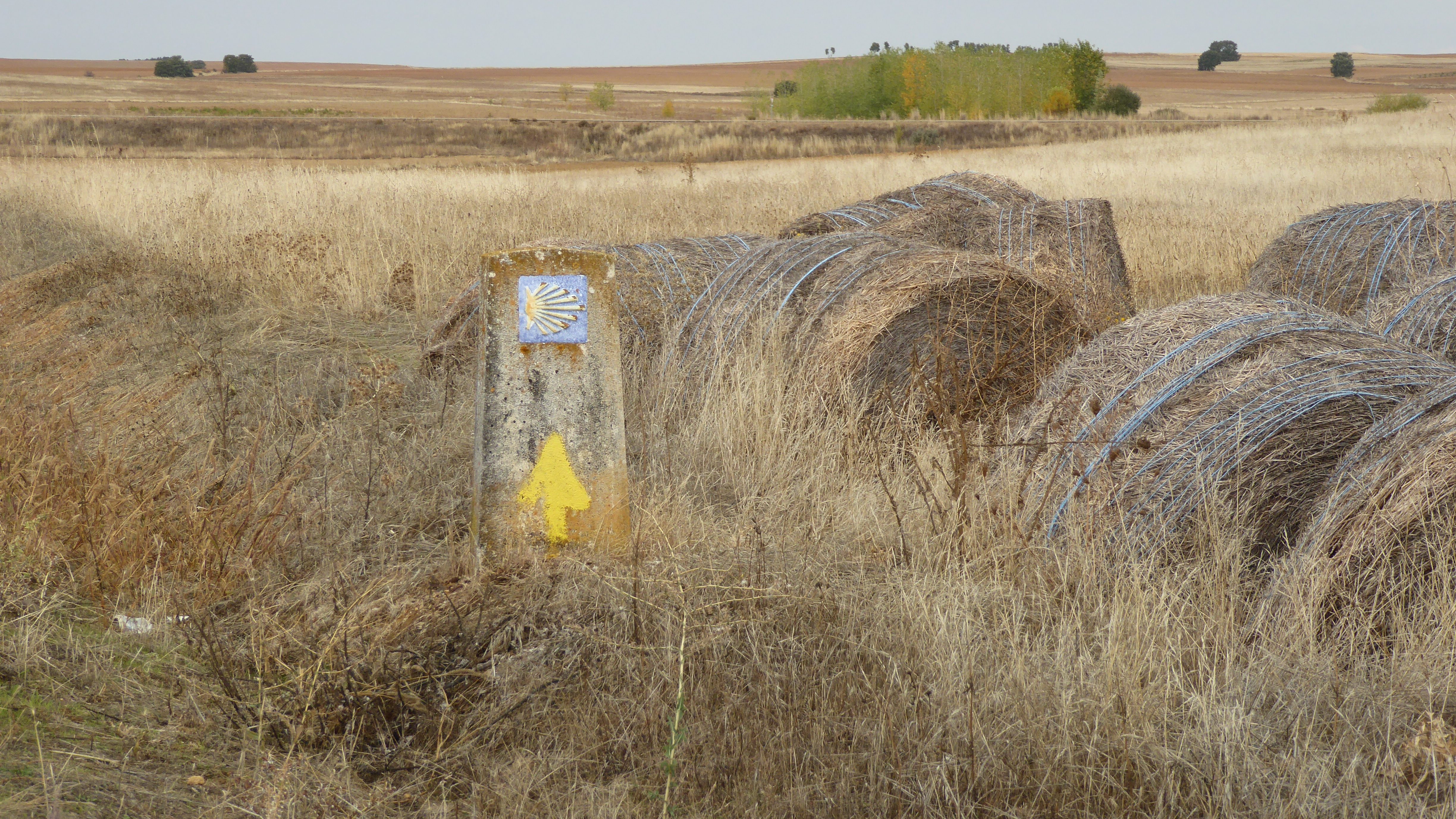
Camino Markers on the Meseta near El Burgo Ranero
We’ll be hitting the road, too in the next couple of weeks. First, we have three nights enjoying the opera in Santa Fe, catching up with old friends and some favorite operas, La Bohème, Rigoletto,and Die Walküre (click to listen)

Beginning on Monday, August 25, we’ll be on the road for almost two weeks, with stops in Denver and Fort Collins, CO; an overnight in Lander, WY; then on to Big Sky, MT; Sheridan, WY; and Frisco, CO. We’ll be catching up with friends and family in most of those places, too.
If any of you are along the way and would like to see us, just holler or reply to this email.
We’ll have a copies of We Ran Away to Sea with us.
Earlier this week, I researched Amazon’s categories and keywords, making a few adjustments. To my amazement, in the past week, our sales have increased from just under one per day to two per day, and moved into the top 10 (varies from day today) in the Sailing Narratives category. Since then, I’ve also adjusted the keywords. We’ll see if that makes a difference, too. There’s a lot to learn.

Desperate Voyage
Kent has been writing book reviews (under name Kent on Amazon). He recently returned to the classic Desperate Voyage (1949) by John Caldwell, who sailed across the Pacific from Panama to Australia singlehanded after World War II to unite with his bride. He was perhaps even more ignorant of sailing than Kent was, and the book is a sometimes hilarious, always compelling read.
Cape Horn: One Man’s Dream, One Woman’s Nightmare
Kent also finished Cape Horn, by Reanne Hemingway-Douglass. Its subtitle: One Man’s Dream: One Woman’s Nightmare intrigued me. Kent’s review is under the name Kent on Amazon. I thought that would have been a great subtitle for We Ran Away to Sea. Or, maybe we should have subtitled it A Love Story?
We found these titles on the Money for Mangos sailing blog which has a nice short list of great sailing adventure books. I suggested they add We Ran Away to Sea to a future list. See Money for Mangos list below, and enjoy reading!
Money for Mangos: Best Sailing Adventure Books
One review of the audio book (available through Amazon Audible). We don’t know who CHS is, but thank you! 5.0 out of 5 stars, Great adventure. Impressed with AI narrator.
As soon as the audiobook was available, I purchased it. Enjoyed going on this adventure with the authors. I learned sailing can be a lot of work. I was very impressed with AI narrator. — CHS
We’ve got more news … maybe some new books …but this is already long, so check back in September.


Leave a Reply